Have you ever looked at a problem in your community—or even across the globe—and thought, “There has to be a better way to do this”? Whether it’s the plastic waste piling up in our oceans, the danger of home fires, or the struggle for food security in remote areas, the world is full of challenges waiting for a fresh perspective.
At Project Paradigm, we believe that a fresh perspective belongs to the youth. We believe that children and teenagers aren’t just the “leaders of tomorrow”—they are the innovators of today. This belief is the heartbeat of The Paradigm Challenge, an annual competition that invites students aged 4 to 18 to turn their boldest ideas into real-world solutions and life-changing prizes. If you have a spark of an idea, a passion for kindness, and a drive to make a difference, keep reading. This guide will show you exactly how to navigate the Paradigm Challenge and turn your creativity into a $100,000 opportunity.
What is the Paradigm Challenge?
The Paradigm Challenge is more than just a science fair or a school project; it is a global movement for positive change. Hosted by Project Paradigm, a private foundation dedicated to fostering social innovation, the challenge asks youth to use kindness, creativity, and collaboration to help solve some of the world’s most pressing problems.
The beauty of the challenge lies in its inclusivity. It is open to students worldwide, and entries can take almost any form. You don’t need to be a coding genius or an engineering prodigy to win. Whether you create a video, a mobile app, a community event, a poster, or a physical invention, the goal remains the same: impact.
The Three Age Divisions
To ensure a fair playing field, the competition is divided into three brackets:
- Division 1: Ages 4–8
- Division 2: Ages 9–13
- Division 3: Ages 14–18
By categorizing participants this way, the challenge celebrates the unique creative strengths of every developmental stage—from the boundless imagination of a 7-year-old to the sophisticated technical skills of a high school senior
The Five Core Categories: Where Will You Make Your Mark?
The Paradigm Challenge focuses on five critical areas that desperately need innovation. When you enter, you’ll choose one of these “Challenge Projects” as your focus:
1. Home Fires: Home fires occur every 90 seconds and claim more lives annually than earthquakes, hurricanes, and tornadoes combined. This was the very first Paradigm Challenge topic, and it remains a vital area for new ideas. Can you design a better escape plan? A device to suppress grease fires? Or perhaps an awareness campaign that effectively encourages people to check their smoke detectors?
2. Waste Reduction: From “fast fashion” to single-use plastics, our planet is struggling under the weight of human waste. This category encourages solutions that promote a circular economy—reusing materials, reducing consumption, or innovating new ways to manage trash.
3. Personal Health: Health isn’t just about the absence of illness; it’s about physical, mental, and social well-being. Projects in this category might tackle anything from teen mental health and stress to physical fitness or hygiene in developing nations.
4. Food Security: How do we ensure that every person on Earth has access to nutritious, affordable food? Solutions here might focus on sustainable farming, reducing food spoilage, or improving the logistics of food distribution in “food deserts.”
5. Biodiversity: Our planet’s ecosystems are delicate and interconnected. This category asks for ideas that protect endangered species, preserve natural habitats, or combat the human activities that threaten the variety of life on Earth.
The “SOLVED” Approach: A Roadmap for Innovation
Project Paradigm doesn’t just throw a problem at you and walk away. We provide a proven framework for problem-solving called the SOLVED method. This six-step process is designed to help you move from a vague “what if” to a polished, competitive entry.
S – Study the Problem: You can’t solve what you don’t understand. Start by diving deep into your chosen category. Read articles, watch documentaries, and look at the data. What are the reasons this problem remains unsolved? What are the root causes?
O – Observe What Others Are Doing: Innovation is not an isolated process. Look at current solutions and ask, “What’s working?” What’s missing? Occasionally, the best “new” idea is an improvement on an old one.
L – List All Imaginable Ideas: This is the brainstorming phase. There are no bad ideas here! Write down every wild, expensive, or “impossible” thought. Often, a “crazy” idea can be scaled down into something brilliant and feasible.
V – Visualize Each Idea: Consider how your solution would actually work in the real world. Who would use it? How would they use it? Drawing sketches or creating a simple storyboard can help you see flaws—and opportunities—early on.
E – Engage Others for Input: This is where the Collaboration pillar comes in. Share your idea with teachers, parents, or even experts in the field. Ask for honest feedback. If you’re working in a team, this is the time to blend your different perspectives into one cohesive plan.
D – Decide Which Idea is Best: After gathering feedback and refining your thoughts, pick your strongest contender. This is the idea you will develop into your final submission.
Turning Ideas Into Prizes: What Can You Win?
We know that passion for the planet is a great motivator, but a little “seed money” for college or a future startup doesn’t hurt either! The Paradigm Challenge offers one of the most generous prize structures in the youth innovation space.
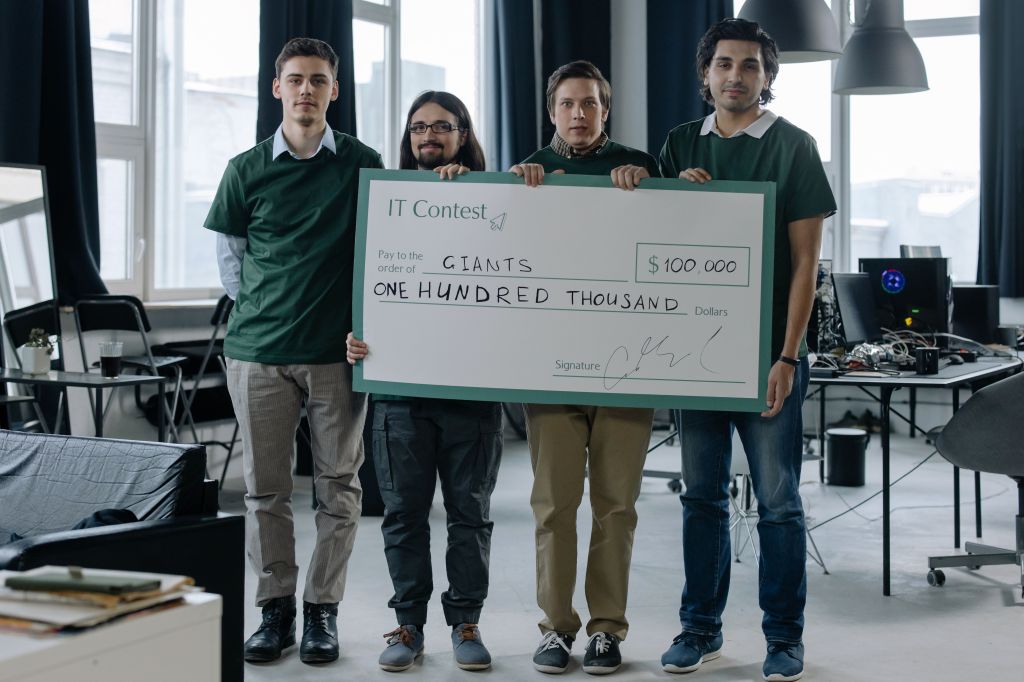
The Grand Prize: $100,000: The top overall entry across all age divisions and categories wins the Grand Prize. This is a life-changing amount of money—up to 100,000** for a team of four or more
25,000 each for smaller teams. Past winners have used these funds to file patents, launch companies, and pay for their university education
Age Division Prizes: In each of the three age divisions, the top three teams receive cash awards:
- 1st Place: $10,000
- 2nd Place: $2,000
- 3rd Place: $1,000
The Trip of a Lifetime: First-place winners in each age division don’t just get a check; they (and a parent or guardian) are flown to Los Angeles for a 4-day, 3-night all-expenses-paid trip. The trip includes a stay at a luxury hotel, a visit to Disneyland, and a glamorous black-tie prize ceremony where the grand prize winner is finally announced.
Educator Grants: We know that behind every great student is a great mentor. That’s why we offer grants to the teachers or parents who inspired the winning entries. The Grand Prize-winning educator receives a $5,000 grant to support their classroom or educational programs.
Inspiration from the Archives: Past Success Stories
Need proof that your idea could win? Look no further than these past Paradigm Challenge champions who turned their “small” ideas into global headlines.
Emma & Scott: The Fire Mitt
The first-ever Grand Prize winners, Emma and Scott, tackled the Home Fire category. They noticed that many kitchen fires become fatal because people panic and use the wrong tools to put them out. They invented the Fire Mitt, a heat-resistant glove that allows someone to safely pick up a burning pan and carry it outside or put a lid on it. Their invention led to a patent and national media coverage.
Benjamin: NOHBO Shampoo Balls
Benjamin was a Division 2 (age category) student who wanted to tackle plastic waste. He realized that billions of plastic shampoo bottles end up in landfills every year. His solution? NOHBO balls, which are single-use, water-soluble “pods” of shampoo that eliminate the need for a bottle entirely. After winning the Paradigm Challenge, Benjamin went on to appear on ABC’s Shark Tank, securing a deal with Mark Cuban.
Gitanjali Rao: Tethys Gitanjali, a 2018 Grand Prize winner, was moved by the water crisis in Flint, Michigan. She invented Tethys, a device that uses carbon nanotubes to detect lead in drinking water instantly and more affordably than traditional lab tests. Gitanjali’s work with Project Paradigm helped propel her toward becoming TIME Magazine’s first-ever “Kid of the Year.
Tips for a Winning Entry
Their “Blue Ribbon” panel of judges looks for five specific criteria when evaluating submissions. If you want to stand out, keep these in mind:
- Effectiveness: Does your idea actually solve the problem or significantly reduce it?
- Feasibility: Is it realistic? Can it be built or implemented with current technology and reasonable resources?
- Originality: Is this a new approach or a significant improvement on an existing one?
- Presentation: How well do you communicate your idea? Whether it’s a video or a poster, make it clear, professional, and engaging.
- Collaboration: Did you work with others? Did you seek out expert advice or community feedback?
A Call to Action for Teachers and Parents
If you are an educator or a parent, you are the bridge between a student’s potential and their success. The Paradigm Challenge is an incredible project-based learning (PBL) opportunity. It encourages students to apply STEM skills, empathy, and critical thinking to a real-world context.
They offer free lesson plans, video resources, and an interactive Student Dashboard to make the process easy to integrate into a classroom or homeschooling curriculum. Plus, with 100 finalist prizes awarded every year, the chances of your students being recognized for their hard work are higher than you might think!
How to Get Started Today
The journey of a thousand miles begins with a single idea. Here is your checklist to get started:
- Register: Head to projectparadigm.org and create a free account.
- Form a Team: You can work alone, but collaboration is one of our judging criteria! Invite friends, siblings, or classmates to join you.
- Pick Your Project: Browse the five categories and find the one that speaks to you.
- Start Your Dashboard: Use the online student dashboard to log your progress and get feedback from our mentors as you go.
- Submit by May 1st: Make sure your final project—including your summary and any supporting materials—is uploaded before the annual deadline.
Conclusion: Your Turn to Change the Paradigm
A “paradigm shift” is a fundamental change in the way we see or do something. For too long, the world has looked at global problems as things only “grown-ups” can fix. At Project Paradigm, they are shifting that view. They know that with a little kindness and a lot of creativity, you have the power to save lives, protect the earth, and improve the world. So, what are you waiting for? The world is waiting for your idea. Turn your ideas into prizes, and let’s change the world together


Leave a Reply